





International Women’s Day 2026 should make the world uncomfortable.
A day that speaks of rights, justice and action cannot honestly be treated as a celebration while women and girls still live with weaker protection, weaker enforcement and weaker freedom than men. This year’s UN Women theme, “Rights. Justice. Action. For ALL Women and Girls”, is not a decorative slogan. It is a direct challenge to governments, institutions and justice systems that speak the language of equality but still fail to deliver it in real life.
The scandal is no longer that the world does not know. The scandal is that it knows and still fails to act.
No country in the world has reached full legal equality for women and girls. In nearly three out of four countries, a girl can still be forced to marry under national law. In more than half the world, rape is still not defined in law on the basis of consent. Those are not technical gaps. They are a warning that rights still collapse at the point where protection should begin.
The harm is not hidden. Around 12 million girls are still married before the age of 18 each year. More than 230 million girls and women alive today have undergone female genital mutilation. In Afghanistan, 1.4 million girls remain barred from school by the de facto authorities, showing how quickly basic rights can be stripped away when power turns against them. These are not separate issues. They are connected signs of the same global failure to protect girls before harm becomes lifelong.
That is why International Women’s Day still matters. The issue is not awareness. The issue is enforcement.
For years, women’s rights have been treated as though the right words might do the job of real protection. Governments issue statements. Institutions host panels. Public bodies post the right slogan for a day. Yet women and girls still struggle to reach safety, legal protection and practical support when they most need it. The problem is no longer whether the world understands the risks. The problem is why systems that claim to defend women and girls still respond too slowly, too weakly, or not at all.
Too much abuse is still wrapped in language that blurs the truth. We hear about culture, family reputation and so-called honour. But honour is not the truth. The truth is power. The truth is control. And the deeper disgrace is the institutional dishonour of systems that know the warning signs and still fail to act with enough urgency.
That failure is not abstract. It appears when a girl disappears from education and no one joins the dots. It appears when child marriage ends a future before it has properly begun. It appears when a girl is cut in the name of tradition. It appears when a woman reports abuse and meets delay, disbelief or exhaustion instead of protection. It appears whenever rights are praised in speeches and denied in practice.
This is the divide the world still refuses to face honestly: the divide between rights written and rights lived.
On paper, progress exists. Laws have changed. International agreements have multiplied. Public promises are easy to make. But rights do not protect anyone by themselves. Rights only matter when they are backed by funding, trained professionals, legal access, early intervention and real consequences for those who abuse or enable harm.
That is why the word justice matters so much in this year’s theme. Justice is not branding. Justice is not symbolism. Justice is what happens when the person most at risk can actually reach protection before the harm becomes lifelong.
Then there is the final word in the theme: action.
Action means more than awareness. It means funding specialist services instead of praising them from a distance. It means teachers, police, health professionals and safeguarding leads recognising coercion early and acting decisively. It means governments collecting usable data, closing legal gaps and defending women’s rights even when doing so is difficult. It means treating child marriage, FGM and exclusion from education not as distant tragedies, but as live tests of whether the rule of law means anything at all.
So let International Women’s Day 2026 be judged by a harder standard.
Not by how many statements are issued.
Not by how many panels are held.
Not by how many buildings are lit up.
Judge it by whether women and girls are safer.
Judge it by whether rights can be enforced.
Judge it by whether justice arrives in time.
https://freedomcharity.org.uk/international-day-of-education-2026/
Women and girls do not need to be praised in principle while abandoned in practice.
They need protection that arrives early, law that works in real life, and systems that stop congratulating themselves for promises while the harm continues.
Sources
UN Women, International Women’s Day 2026 and CSW70
https://www.unwomen.org/en/news-stories/media-advisory/2026/02/iwd2026-and-csw70
UN Women on legal equality for women and girls
https://www.unwomen.org/en/news-stories/press-release/2026/03/no-country-in-the-world-has-reached-full-legal-equality-for-women-and-girls
UNICEF child marriage data
https://data.unicef.org/topic/child-protection/child-marriage/
UNICEF on FGM
https://www.unicef.org/press-releases/over-230-million-girls-and-women-alive-today-have-been-subjected-female-genital
UNESCO on Afghanistan girls’ education
https://www.unesco.org/en/articles/afghanistan-14-million-girls-still-banned-school-de-facto-authorities
Aneeta Prem London 6 March 2026

The murder of Henry Nowak raises difficult questions about policing, evidence and the duty to preserve life
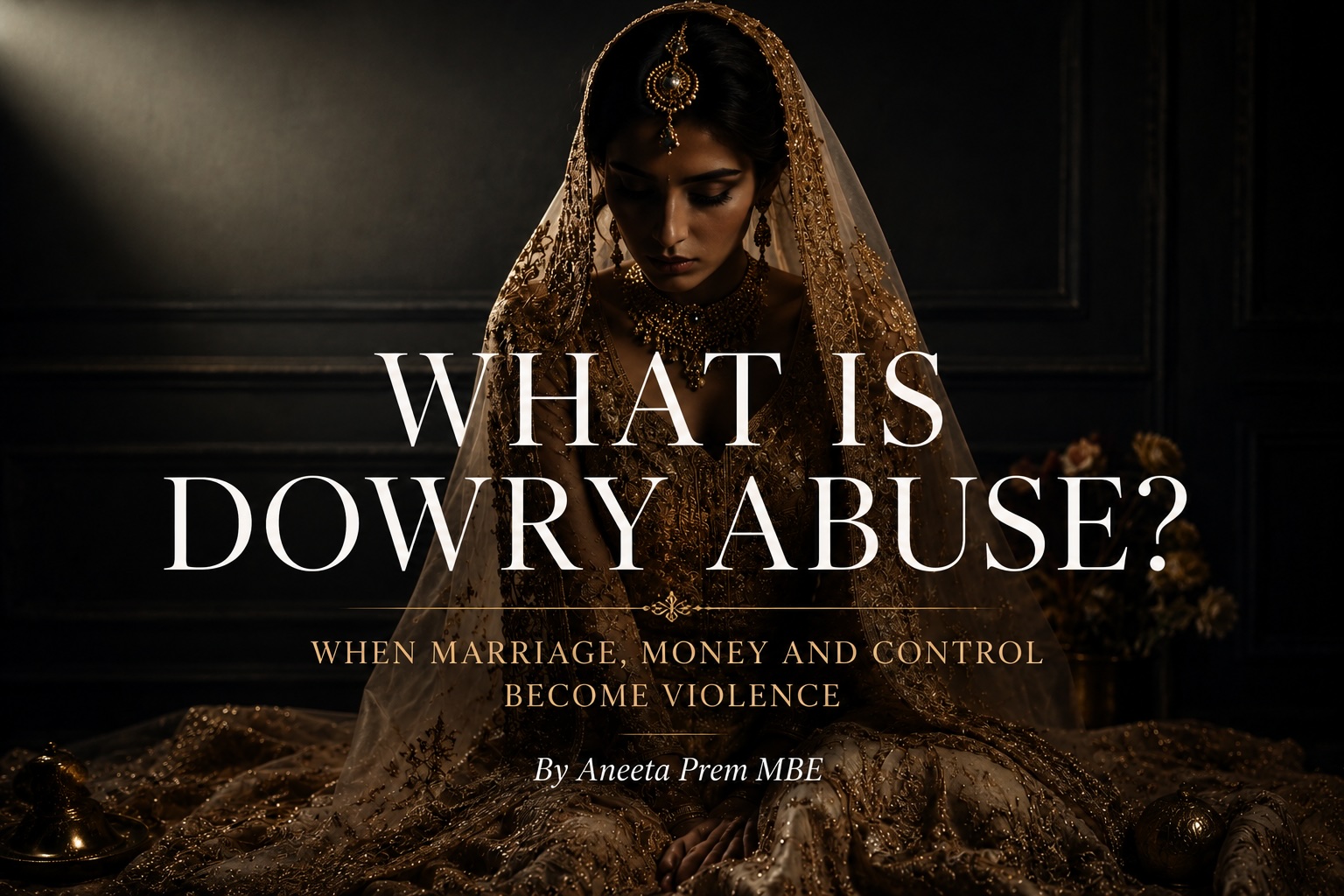
The death of Twisha Sharma has reopened a global question about dowry abuse, coercive control, family reputation and why women are still judged by what their families can provide.
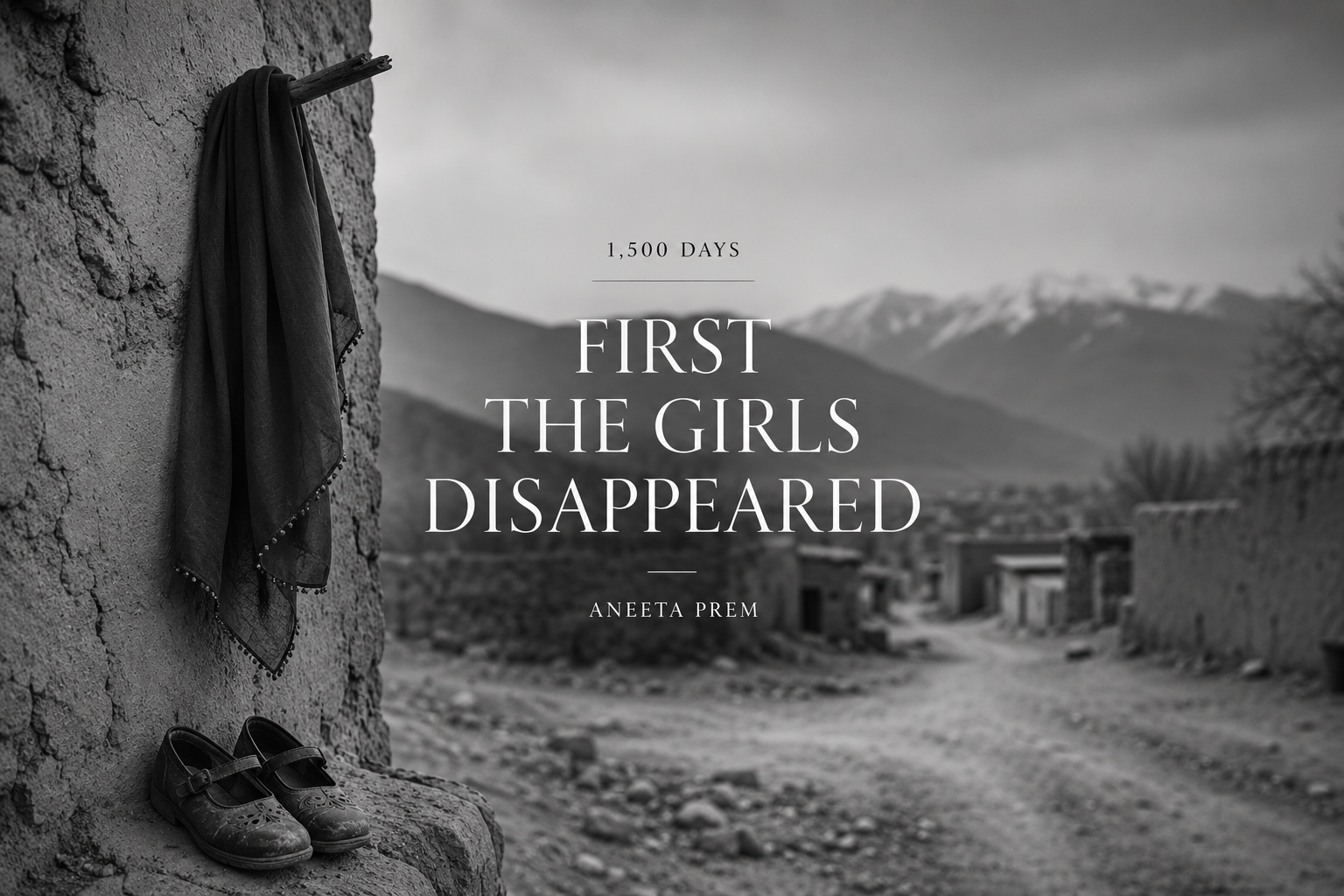
Afghanistan's child marriage is worsening as hunger, aid cuts and Taliban family law place girls at risk. Aneeta Prem writes on why silence is not consent.

AI abuse in schools is not a reason to remove every photograph. It is a reason to use images with stronger consent, clearer purpose, and better safeguarding judgment.
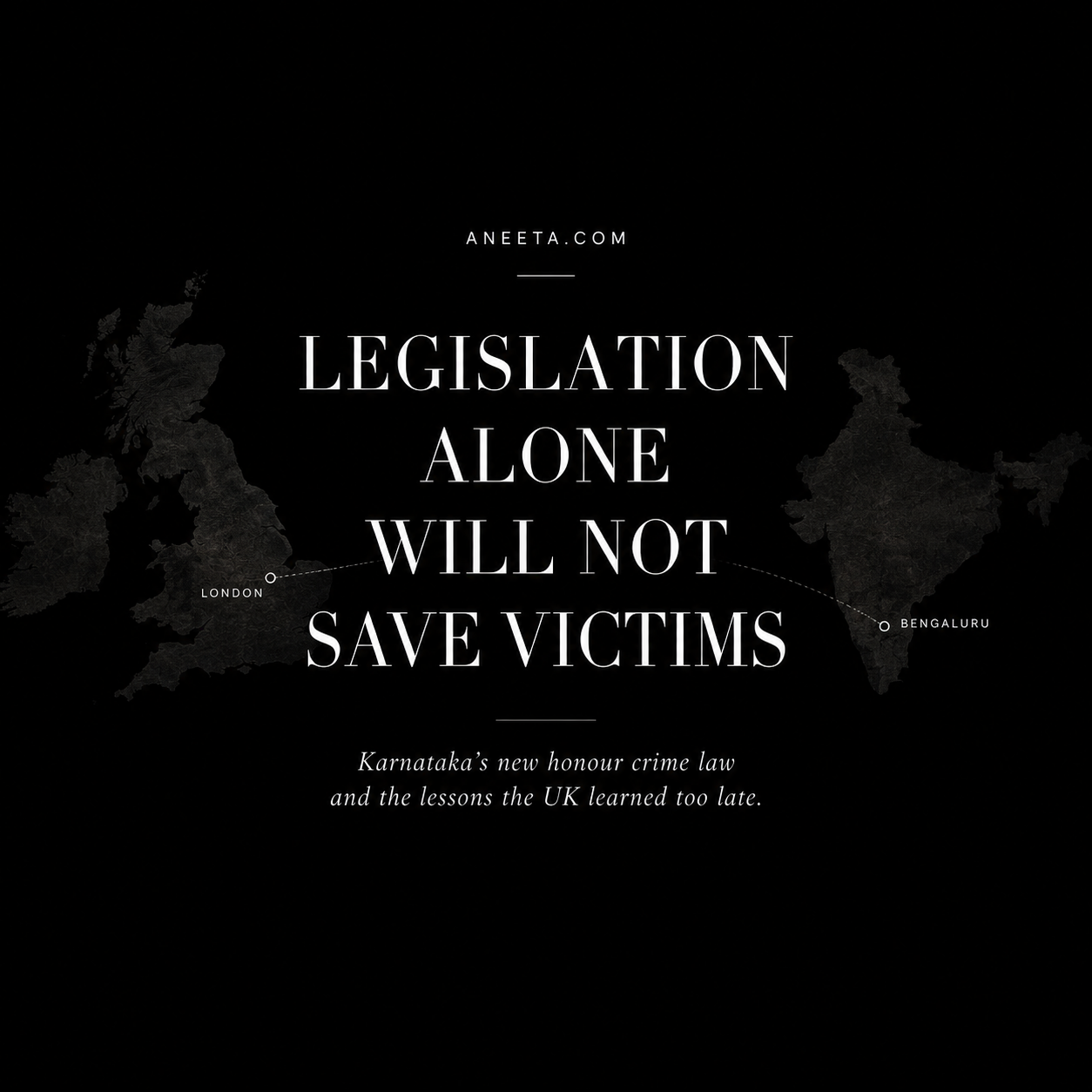
Laws can punish abuse after it happens. Preventing dishonour abuse requires something harder: educating children early, supporting victims safely, and challenging the beliefs that allow coercion, fear and control to thrive behind closed doors.

A Child Cannot Consent to Marriage. The Nottingham child marriage case shows why UK law had to change. Since February 2023, under-18 marriage has been a criminal offence in England and Wales, including some overseas and religious ceremonies, even where coercion is not proved.